
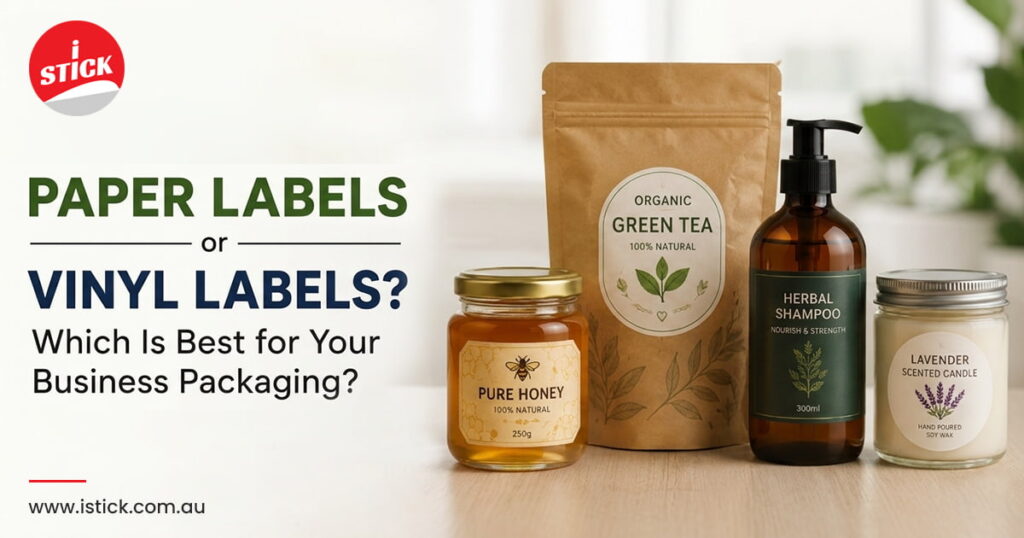
Choosing packaging sounds easy at first until you start comparing materials.
A lot of businesses begin with design ideas, colours, logos, and product presentation. Then somewhere during the process comes the question most people do not really think about in the beginning — should the labels be paper or vinyl?
It seems like a small detail, but it changes more than people expect.
Some labels look great for a few weeks and then slowly start peeling around the edges. Others survive water, sunlight, refrigeration, delivery handling, and constant use without much trouble. The right material depends less on trends and more on how the product is actually going to be used in real life.
That is why businesses still spend time comparing paper labels and vinyl labels before finalising packaging.
Why Labels Matter More Than Most Businesses Think
Most customers notice packaging before they notice the product itself.
It happens quickly. Someone picks up a bottle, jar, box, or container and forms an opinion almost immediately. Even when people do not realise it, label quality affects how professional a product feels.
Cheap-looking packaging can make even a good product feel less trustworthy. On the other hand, clean and well-finished custom labels tend to create a stronger first impression without needing extra marketing.
That is one reason businesses put so much attention into things like:
- Product labels
- Packaging stickers
- Custom branding labels
- Retail packaging
- Bottle labels
- Printed packaging materials
Good labels are not only there to carry information. They help products feel complete.
What Are Paper Labels?
Paper labels are probably the type most people see every day without thinking about it.
They are widely used across retail packaging because they are affordable, simple to print, and suitable for many indoor products. Businesses often choose them when they need large quantities without pushing packaging costs too high.
You will usually see paper packaging labels on:
- Food packaging
- Cosmetic products
- Shipping boxes
- Retail jars
- Bakery packaging
- Promotional packaging
One reason people still prefer paper is appearance. It has a softer and slightly more natural look compared to synthetic materials. For some brands, especially handmade or boutique-style businesses, that matters quite a bit.
Benefits of Paper Labels
There is no perfect label material for every product, but paper labels do have some obvious advantages.
They are generally:
- More cost-effective
- Easier to print in bulk
- Good for indoor packaging
- Available in different finishes
- Suitable for short-term product use
- Easier to write on manually
For businesses handling large packaging runs, custom paper labels often make financial sense.
What Are Vinyl Labels?
Vinyl labels are designed more for durability than simplicity.
The material itself is stronger, more flexible, and far better at handling moisture or rough conditions. That is why vinyl is commonly used for products that may end up outdoors, inside refrigerators, or exposed to regular handling.
A lot of businesses choose custom vinyl labels when they need packaging that lasts longer without fading or peeling too quickly.
They are commonly used for:
- Beverage bottles
- Waterproof packaging
- Outdoor products
- Window graphics
- Automotive branding
- Industrial equipment
- Promotional decals
Compared to paper, vinyl feels more resistant almost immediately.
Benefits of Vinyl Labels
The biggest reason businesses move toward vinyl usually comes down to durability.
Vinyl labels are known for being:
- Water-resistant
- Tear-resistant
- Longer lasting
- Better for outdoor use
- More resistant to fading
- Suitable for refrigeration and moisture
That extra protection matters for products exposed to difficult conditions.
Paper Labels vs Vinyl Labels: The Biggest Differences
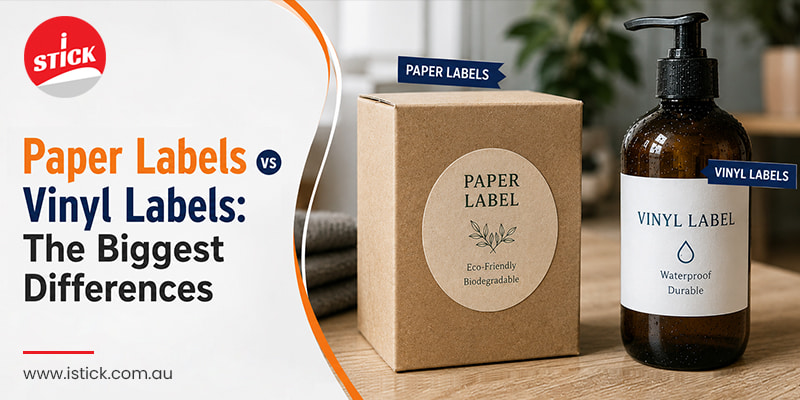
This is usually where businesses start narrowing down their decision.
At first, both materials can appear similar visually. But once products begin getting shipped, stored, handled, or exposed to moisture, the differences become much more obvious.
Durability
This is probably the easiest comparison.
Paper labels are fine for controlled indoor environments, but they are not designed for heavy exposure to water or rough handling. Once moisture gets involved, the material can weaken fairly quickly.
Vinyl labels hold up much better over time, especially outdoors or in refrigerated settings.
Cost
Paper is usually the cheaper option.
For businesses printing large quantities of labels, especially for short-term packaging, paper label printing often works better financially.
Vinyl costs more because the material itself is stronger and more durable.
Appearance
This part depends heavily on branding style.
Some businesses actually prefer the slightly textured and softer look of paper labels, particularly for artisan packaging or boutique branding.
Others prefer the cleaner and sharper finish that comes with vinyl sticker printing.
Neither option is automatically better visually. It depends on the type of product being sold.
Water Resistance
This is where vinyl clearly has the advantage.
Waterproof vinyl labels are built for moisture, spills, refrigeration, and outdoor conditions. Standard paper labels usually struggle in those environments unless additional coatings are added.
For bottles, chilled products, or outdoor packaging, vinyl tends to be the safer choice.
Environmental Considerations
A lot of businesses now pay closer attention to packaging sustainability.
Because of that, some brands lean toward paper packaging labels for products where eco-conscious presentation matters. Paper materials often feel more natural to customers, especially for organic or handmade products.
Still, sustainability also depends on adhesives, coatings, inks, and printing methods, not only the label material itself.
Which Businesses Usually Choose Paper Labels?
Paper labels continue to work well for many industries because not every product needs heavy-duty durability.
Businesses commonly using custom paper labels include:
- Food businesses
- Candle brands
- Cosmetic packaging companies
- Bakeries
- Retail stores
- Gift packaging brands
If the packaging mostly stays indoors and avoids moisture, paper labels are usually more than enough.
When Vinyl Labels Make More Sense
Some products go through much tougher conditions during storage and use.
That is where vinyl packaging labels generally perform better.
Businesses often choose vinyl for:
- Beverage packaging
- Outdoor products
- Automotive products
- Waterproof containers
- Industrial packaging
- Long-term promotional stickers
If a product will be exposed to water, sunlight, oils, or regular handling, vinyl usually lasts longer without losing quality.
Final Thoughts
The discussion around paper labels vs vinyl labels is less about which material is universally better and more about choosing the right fit for the product.
Some businesses only need affordable and professional-looking packaging for indoor shelves. Others need labels capable of surviving transport, refrigeration, moisture, and outdoor conditions.
That is why both materials continue to stay popular.
For shorter-term retail packaging, paper labels still make practical sense. They are affordable, flexible, and visually clean. For products needing stronger durability and moisture resistance, vinyl labels generally provide better long-term performance.
In the end, the best packaging decisions usually happen when businesses think about how customers will actually use the product after it leaves the shelf.