
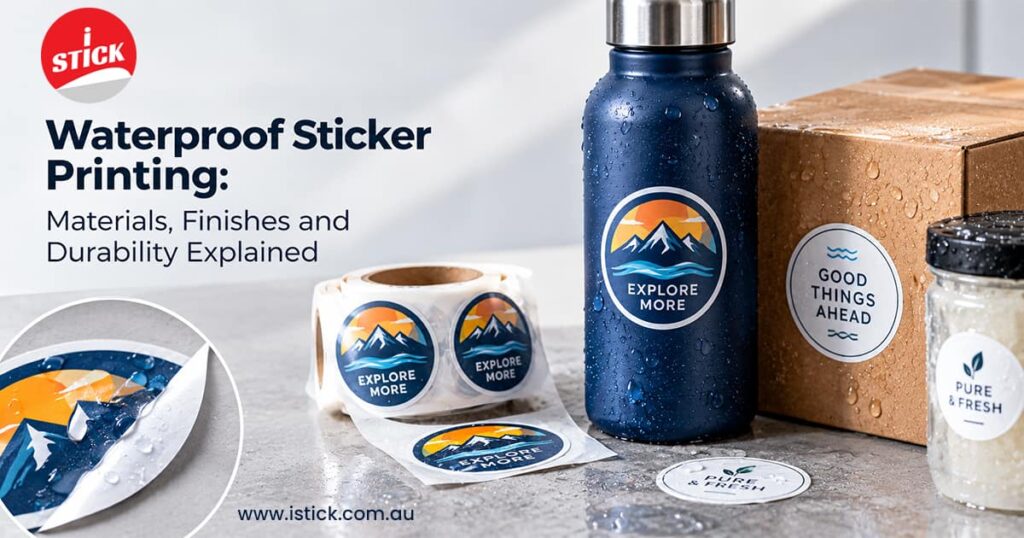
Waterproof stickers are a sensible pick when your branding has to cope with moisture, handling and daily wear. Product packaging, drinkware, outdoor signage, promo materials: the right waterproof sticker printing setup keeps things looking sharp for much longer. But “waterproof” isn’t one fixed standard. The material, adhesive, finish and where the sticker ends up all change how it holds up.
If you’re about to order custom waterproof stickers, it helps to know how those pieces fit together. Here’s what to look at when comparing materials, finishes and durability.
What Makes a Sticker Waterproof?
It’s not just the printed design. The face material, ink, adhesive and any protective coating all play a part in how a sticker handles wet conditions.
Paper stickers usually don’t suit regular moisture unless they’ve been treated. Water softens the paper, damages the printed surface and the sticker starts to fall apart.
Vinyl is the usual alternative because it naturally resists moisture. Paired with the right inks and a suitable finish, it works well indoors and out.
That said, water resistant doesn’t mean it’ll survive anything. Repeated soaking, harsh cleaning products, heat and long stretches in direct sun can all wear a sticker down, depending on how it’s made.
Before you order, think about what your stickers will actually face: the odd splash, regular washing, rain, or constant outdoor exposure. That tells you what to ask for.
Which Materials Are Best for Waterproof Sticker Printing?
Material is the biggest decision you’ll make here. Different ones suit different environments, budgets and branding needs.
Vinyl Stickers for Water Resistance and Durability
Vinyl is the most versatile option for waterproof sticker printing. You’ll see it on product branding, promotional stickers, vehicle graphics and outdoor jobs where moisture is a factor.
Next to standard paper, it copes far better with splashes, rain and humidity. It also comes in a range of colours and finishes, so you don’t have to give up good-looking branding to get durability.
For anything outdoors, go with a vinyl stock made for external use. How it performs depends on the material, print method, exposure and whether a compatible laminate goes over the top.
Explore iStick’s vinyl sticker stocks to compare options for different applications.
Clear Vinyl Stickers for a Transparent Finish
Clear vinyl lets your design sit straight on the surface without a white backing showing.
It’s popular on glass, windows, clear packaging and some product containers, and suits brands after a cleaner, quieter look.
Think about what’s underneath the sticker. Light-coloured artwork can disappear on dark or coloured surfaces unless a white ink layer is added.
Outdoors, pair it with a suitable clear vinyl stock and a compatible protective finish to get more life out of it.
Paper Stickers for Dry Applications
Paper still makes sense for plenty of packaging and indoor labelling: boxes, envelopes, inserts, anything that stays dry.
It’s just not the right call for waterproof jobs. If your product lives in a fridge, a bathroom or somewhere damp, check the stock is actually made for that rather than assuming all label materials behave the same.
How Do Sticker Finishes Affect Durability?
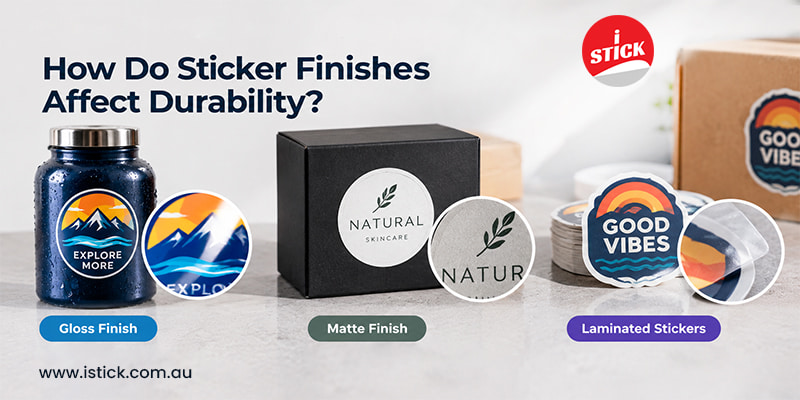
Finish changes how your stickers look and how well they handle everyday wear.
Gloss Finish
Gloss gives a shiny surface that makes colours pop. It works well on bright product labels, promotional stickers and packaging that needs to stand out.
Depending on the material and process, it can add some surface protection too. A glossy look alone doesn’t make a sticker waterproof though.
Matte Finish
Matte is smooth and non-reflective, which suits minimalist branding, premium packaging and designs where easy reading matters.
Don’t assume matte means less durable. What counts is the material underneath and whether a protective laminate has been applied.
Laminated Stickers
Lamination puts a protective layer over the print. It helps against moisture, scratches, UV and general handling.
For stickers used outdoors or on things people handle a lot, it’s well worth it. iStick offers gloss and matte lamination, so you can choose between the look you want and the protection you need.
Keep in mind that lamination protects the surface. It won’t make a poorly matched adhesive or exposed edge waterproof by itself.
You can explore iStick’s sticker lamination options when comparing protective finishes.
What Affects the Durability of Waterproof Stickers?
Even with the right material, a few other things decide how long stickers last.
Sunlight and UV exposure:
Long hours in the sun fade printed colours. For outdoor use, pick materials and print options built for UV, and consider a compatible laminate for extra protection.
Adhesive and surface compatibility:
A tough sticker still needs to stick. Clean, smooth surfaces give the best results, while dusty, oily or textured ones don’t. Some plastics and painted finishes are tricky to bond to, so check before you order.
Temperature and humidity:
Extreme heat or cold and swings in conditions can weaken adhesive. If the sticker is going on a refrigerated product, equipment or an outdoor surface, choose a material that suits those conditions.
Handling and abrasion:
Stickers on reusable containers, tools and things that get picked up constantly will get rubbed and scratched. A protective finish cuts down the wear.
Application and curing:
Apply to a clean, dry surface and follow the instructions. Getting a sticker wet straight after applying it can affect the bond, depending on the adhesive.
Thinking these through before printing makes it much easier to match the sticker to where it’ll live.
Are Waterproof Stickers Suitable for Bottles and Product Packaging?
Yes, they’re a good fit when labels have to keep looking decent despite moisture or regular handling.
For bottles, jars and containers, vinyl or another suitable synthetic is usually a better bet than standard paper, especially if the packaging sits in damp spots or gets handled a lot.
It comes down to how the product is stored and used. A label on a dry pantry jar has very different needs from one on a chilled drink bottle or something kept in the bathroom.
Also ask whether the container will be washed, collect condensation or go through a dishwasher. Not every waterproof sticker handles repeated washing or dishwasher cycles, so if that’s on the cards, confirm the whole sticker construction has been tested for it.
The goal is a label that performs properly and still suits the product. Get that right and your branding stays clear and consistent.
How to Choose the Right Waterproof Sticker for Your Business
A few practical checks before you order.
Start with where the sticker goes and what it’ll be exposed to. That narrows down the material and adhesive quickly.
Then the design: white or transparent background, gloss or matte, and whether a custom shape would suit your packaging better.
Think about how long it needs to last, too. Stickers for a short promotion don’t need the same protection as ones meant to stay outdoors for years.
Last, check your artwork and production specs before approving. Make sure the design is clear at the final print size and any protective finishing is included.
If you’re stuck on material, talk to your sticker printer. Telling them about the surface, the environment and how long you need it to last makes it a lot easier to point you to the right option.
Order Custom Waterproof Stickers from iStick
Waterproof stickers take more than a good design. Material, print method, adhesive and finish all work together to decide how well they cope with moisture and daily use.
At iStick, you can look through vinyl sticker stocks for indoor and outdoor use, plus finishing options that add surface protection. Product labels, branded packaging, promotional stickers or outdoor graphics, getting the specs right is what gives you a result that looks professional and lasts.