
Not every sticker is built to survive outdoors. One that holds up fine on a laptop or a product box can start peeling, fading, or breaking down once it’s exposed to rain, sun, heat, or shifting temperatures.
For stickers going on cars, outdoor gear, packaging, bottles, windows, or machinery, the material and finish you pick actually matter.
So what makes a sticker waterproof, UV-resistant, and weatherproof? It comes down to a mix of things: the base material, the adhesive, the ink, and the coating used to protect the print.
What Makes a Sticker Waterproof?
A waterproof sticker is built to shrug off moisture without the design fading or the sticker itself weakening.
Material choice does most of the heavy lifting. Vinyl is the go-to for waterproof stickers because, unlike paper, it doesn’t soak up water. That makes it a solid pick for anything that’ll see regular contact with moisture.
But vinyl on its own isn’t the whole story — how it’s printed and finished matters too. A sticker can be printed on fully waterproof vinyl and still need a laminate on top to hold up against scratches and daily wear.
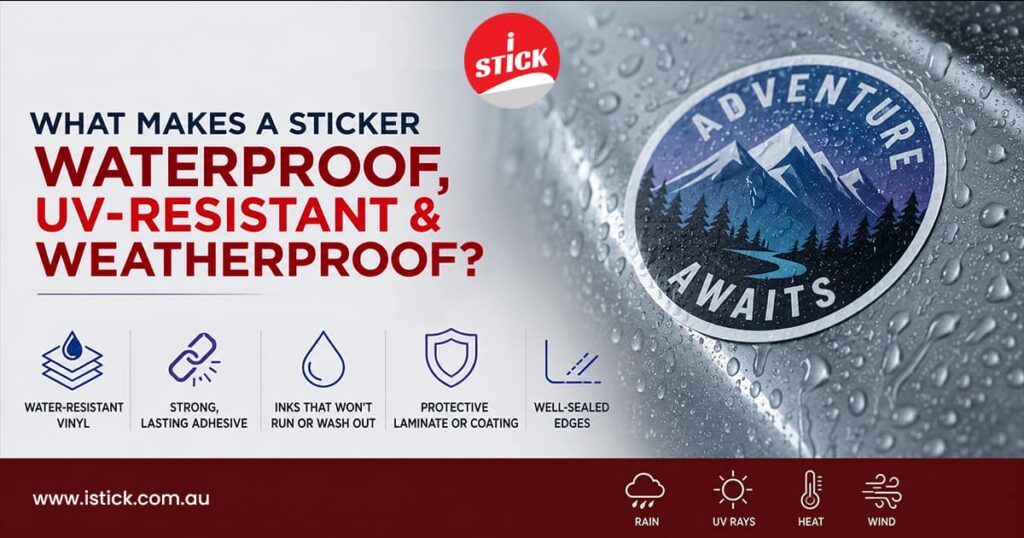
A properly waterproof sticker usually comes down to:
- Water-resistant vinyl
- A strong, lasting adhesive
- Inks that won’t run or wash out
- A protective laminate or coating
- Well-sealed edges
Get that combination right, and the sticker keeps its look through rain, splashes, and humidity.
How Are Stickers Made UV-Resistant?
UV resistance is about standing up to sunlight over time.
Leave ordinary printed material out in the sun long enough and the UV rays start breaking down the pigments — reds, yellows, and blues fade first, usually the fastest.
UV-resistant stickers get around this with inks and finishes built specifically to hold their colour under sustained sun exposure. A laminate layer adds extra protection by taking some of that UV impact away from the print itself.
This matters most for:
- Car and vehicle stickers
- Outdoor signs and labels
- Window decals
- Equipment labels
- Outdoor promotional stickers
- Garden and nursery labels
- Product ID stickers
- Safety and warning labels
If a sticker is going to live outside long-term, UV resistance is worth checking before you go with the cheapest option on offer.
What Makes a Sticker Weatherproof?
Weatherproofing isn’t just about rain — it’s about coping with everything outdoors throws at it: sun, heat, cold, humidity, dust, wind, and constant temperature swings.
That means every part of the sticker needs to pull its weight. The material has to stay stable as temperatures shift. The adhesive can’t go soft in the heat or brittle in the cold. The ink has to resist fading, and the coating needs to fend off moisture, scratches, and general wear.
This is exactly why a sticker labelled “waterproof” isn’t automatically ready for years outdoors.
Vinyl vs Paper Stickers for Outdoor Use
Material is usually the biggest difference between an indoor sticker and an outdoor one.
Paper is cheap and works fine indoors — packaging, stationery, short-run labels. But untreated paper absorbs moisture, and rain or humidity can ruin it fast.
Vinyl holds up much better. It’s flexible, resists moisture, and handles most outdoor applications without issue.
For stickers that need to last outside, look for outdoor-grade vinyl paired with a permanent adhesive, durable ink, and a laminate finish.
Which one you actually need comes down to where the sticker’s going and how long it has to last.
Why Adhesive Matters as Much as the Sticker Material
Even the best waterproof material won’t save a sticker with the wrong adhesive.
Outdoor adhesives need to hold their bond through moisture, heat, sun, and temperature changes — and the surface matters just as much. Glass, metal, plastic, painted surfaces, vehicles, and textured materials all call for different adhesive properties.
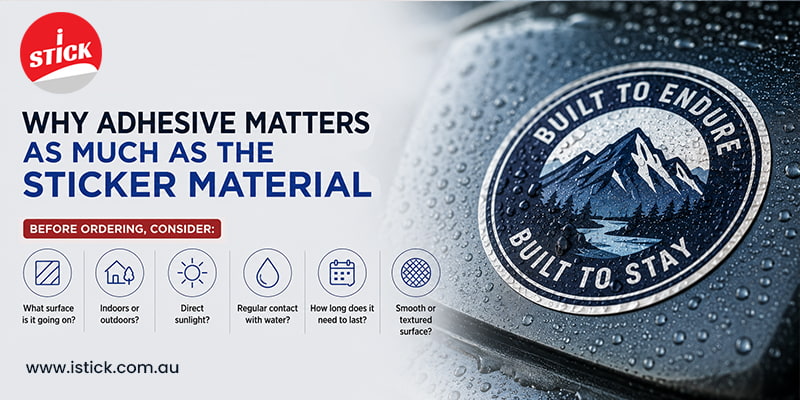
Before ordering, it’s worth working through:
- What surface is it going on?
- Indoors or outdoors?
- Direct sunlight?
- Regular contact with water?
- How long does it need to last?
- Smooth or textured surface?
Answering these upfront makes it much easier to land on the right spec.
Does Lamination Make Stickers More Durable?
Yes — noticeably so.
A laminate sits over the print as a protective layer, shielding it from water, UV, scratches, scuffing, dirt, and general handling. For outdoor stickers especially, lamination is what keeps them looking good over the long haul.
Finish is a separate choice: gloss gives a brighter, reflective look, while matte goes softer and less shiny. Which one’s “best” really depends on the look you’re after and where it’s going.
How Long Do Waterproof and Weatherproof Stickers Last?
There’s no fixed lifespan that applies across the board.
How long a sticker lasts depends on the material, adhesive, ink, laminate, surface, how well it was applied, and the conditions it’s exposed to.
A sticker on an indoor water bottle is dealing with a completely different environment than one stuck to a vehicle parked outside every day. Sun, heavy rain, extreme heat or cold, frequent washing, and general abrasion all chip away at how long a sticker lasts.
Because of that, it’s better to choose a sticker based on where it’s actually going rather than trusting a generic durability claim.
Choosing the Right Sticker for Your Application
The best sticker isn’t necessarily the thickest or priciest one — it’s the one matched to where it’s actually being used.
Indoor branding can usually get away with paper or standard vinyl. Bottles, packaging, vehicles, and outdoor gear are better served by waterproof vinyl. And anything facing long-term sun exposure needs UV-resistant printing plus a protective laminate.
If durability is the priority, it’s worth talking through the application with your sticker printer before ordering — they can point you to the right vinyl, adhesive, ink, laminate, and finish for the job.
Conclusion
Waterproof, UV-resistant, and weatherproof stickers aren’t defined by material alone. It’s the combination — durable vinyl, a strong adhesive, quality inks, and the right laminate — that lets a sticker hold up under real-world conditions.
If your stickers need to handle rain, sun, or everyday outdoor wear, getting the spec right from the start makes a real difference down the line — and for brands and businesses, it’s what keeps a sticker looking professional long after it’s been applied.