
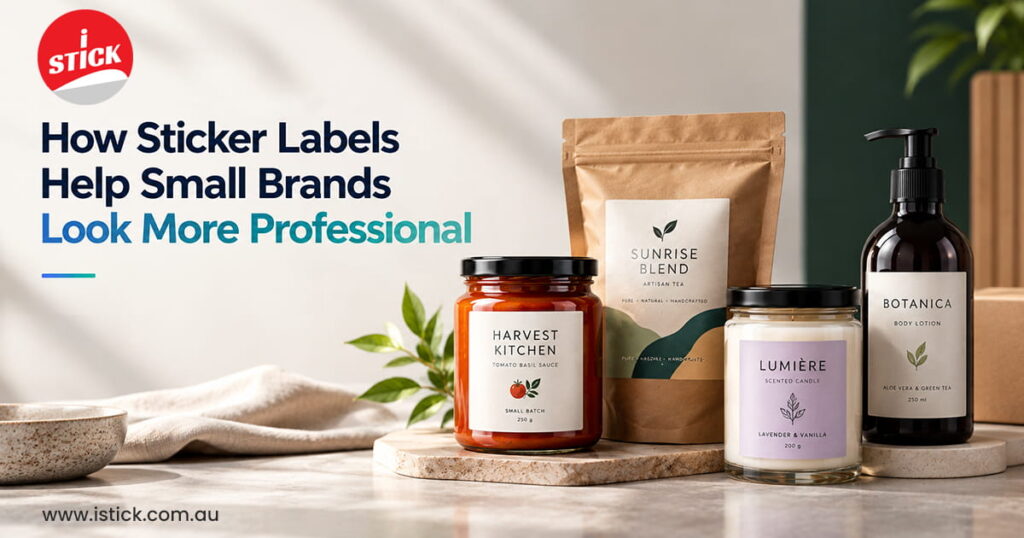
Packaging is usually the first thing a customer physically touches. Before they try the product, read your About page or hear your story, they’re holding a jar, bottle, pouch or box and forming an opinion about it.
Which is where sticker labels earn their keep. You don’t need custom moulded packaging or a five-figure print run to make a product range look sorted. A decent custom product label on plain packaging does a lot of that work for you, and it helps people remember who you are next time.
Candles, cosmetics, sauces, cold brew, handmade soap, whatever you sell — the right label takes packaging from “fine” to something you’d happily put on a shelf next to a brand ten times your size.
Create a Consistent Brand Look
Consistency is the cheapest professional-looking trick there is. Keep your logo in the same spot. Stick to the same two or three colours and the same typeface across your product labels. Do that and people start recognising your products before they’ve read a word on them.
Say you run a small skincare line. The moisturiser, the cleanser and the body oil all share one label layout, and only the product name and the colour band change between them. Nothing looks copy-pasted, but everything clearly comes from the same place.
That pays off most when your products sit side by side — a market stall, a shelf, a product grid on your own site.
Make Simple Packaging Look More Premium
You don’t need printed boxes or custom glass to look premium. A well-designed custom sticker turns a plain amber jar or a kraft pouch into branded packaging, which is handy when you’re starting out or trialling something new and don’t want to commit to tooling.
The difference between a blank container and the same container with a sharp label is bigger than most people expect.
Material and finish matter too. Matte tends to read as quiet and considered. Gloss is brighter and holds colour better. There are specialty stocks worth looking at if you want the packaging itself to do some talking.
Help Customers Recognise Your Products
Recognition comes from repetition. There’s no shortcut.
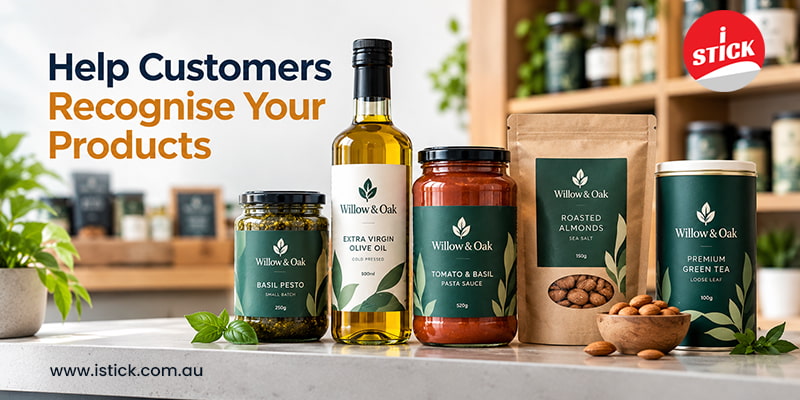
Every time someone sees the same logo, the same colours, the same layout, it sticks a little more. Custom product labels give you one more place to repeat that, and it’s the place customers actually hold in their hands.
If you sell through markets, independent stockists or a few online channels, your product is sitting next to dozens of others fighting for the same three seconds of attention. A label people recognise helps you win a few of those.
It also does something subtler. A range with consistent labelling reads as an established business. The same range with mismatched labels reads as a hobby.
Give Each Product Its Own Identity
Consistent doesn’t mean identical.
A good label system holds your core branding steady while letting each product be itself. Change the colour, swap the illustration, adjust the label size, use a different product name — just keep the logo and layout where they always are.
This works especially well when you’ve got variations.
A coffee roaster can run one label template and change the colour for each blend. A candle maker can keep the branding identical across the range and let the fragrance name and a small graphic do the differentiating.
Customers can scan the shelf and find what they want without the range falling apart visually.
Provide Important Product Information
Labels aren’t only decoration. They’re also where customers look for the practical stuff before they buy or while they’re using the product.
Depending on what you sell and what rules apply to it, that might include:
- Product name
- Brand name or logo
- Ingredients or materials
- Size or quantity
- Instructions
- Contact details
- Website address
- Barcode
- Batch or product information
- QR code
Legibility is the part people get wrong. A gorgeous label nobody can read is a problem, particularly on small containers where the temptation is to shrink the type until it fits.
Good product labels handle the branding and the information without either one crowding the other.
Build Trust With a More Finished Presentation
Small brands are usually up against businesses with far bigger packaging budgets. A label won’t fix a mediocre product, but it absolutely shapes the first impression.
A clean, properly printed label signals that someone thought about this. A crooked inkjet sticker peeling at the corner signals the opposite, fairly or not.
That matters most for handmade and small-batch products, where buyers are already weighing up whether you’re a real business. The label is a quick answer to that question.
When you’re new and nobody knows your name yet, those small signals carry more weight than they will later.
Make Product Photography More Brandable
Your packaging shows up in every photo you take.
Website, Instagram, marketplace listings, ads, print — the label is in all of it. A recognisable custom label keeps your products looking like a set instead of a collection of one-offs.
Before you finalise a design, picture three or four of your products photographed together. Does it look like a range? If the answer is no, the labels are usually why.
If your sales lean heavily on Instagram or a visual marketplace, this is less of a nice-to-have and more of the whole game.
Choose Labels Based on How Your Product Is Used
Looks are half of it. The other half is whether the label survives contact with real life.
Before you order custom sticker labels, think about where the label goes and what it has to put up with.A bath product living in a steamy shower needs a different material from a candle sitting on a shelf. Anything that gets refrigerated, handled constantly, left in sunlight or stored outdoors has its own requirements, and the adhesive matters as much as the face stock.
Container shape is the other thing people underestimate. A design that sits beautifully on a flat box can wrinkle or lift on a curved bottle or a small, tight-radius jar.
Get the material, adhesive, size and finish right together and the label still looks good six months in.
Start Small and Scale With Your Business
Custom sticker printing gives you room to change your mind, which is worth a lot early on.
When you launch, you don’t really know which products will sell. Ordering labels for what you’re making now lets you test, drop what isn’t working and tweak the branding without scrapping an entire packaging system.Once you know what’s selling, you can build out a proper labelling system across sizes, variants and new lines.
That flexibility is why custom product labels suit brand-new businesses and established small brands alike.
Create a More Professional Product Range With Custom Labels
Looking professional isn’t really about spending more. It’s about making deliberate choices on branding, materials, information and presentation, and then sticking to them.
Well-designed sticker labels give you consistency, make your products easier to recognise and lift plain packaging into something that looks finished. They carry the practical information customers need, and they tie your packaging to everything else you’re doing online and in store.
If you’re launching a range, refreshing packaging that’s started to look dated, or just want your products to look more put together, labels are a sensible place to start.
Get the design, material, size and finish right and they stop being a packaging detail. They become part of how people recognise you.